Pisco: One Name, Two Nations, and a Grape Transformed
A clear grape brandy from the sunbaked Pacific coast has become the object of a rivalry as fierce as any in the drinks world. Behind the feud lies a spirit of startling purity and freshness.
Few spirits carry as much national pride, or as much diplomatic friction, as pisco. This clear grape brandy is produced along the arid Pacific coast of South America, and both Peru and Chile claim it as their own with a passion that spills well past the tasting room into courtrooms and trade negotiations. To pour a glass of pisco is to hold a small piece of a rivalry that has simmered for more than a century, rooted in a war, a stolen name, and two proud culinary traditions that refuse to yield.
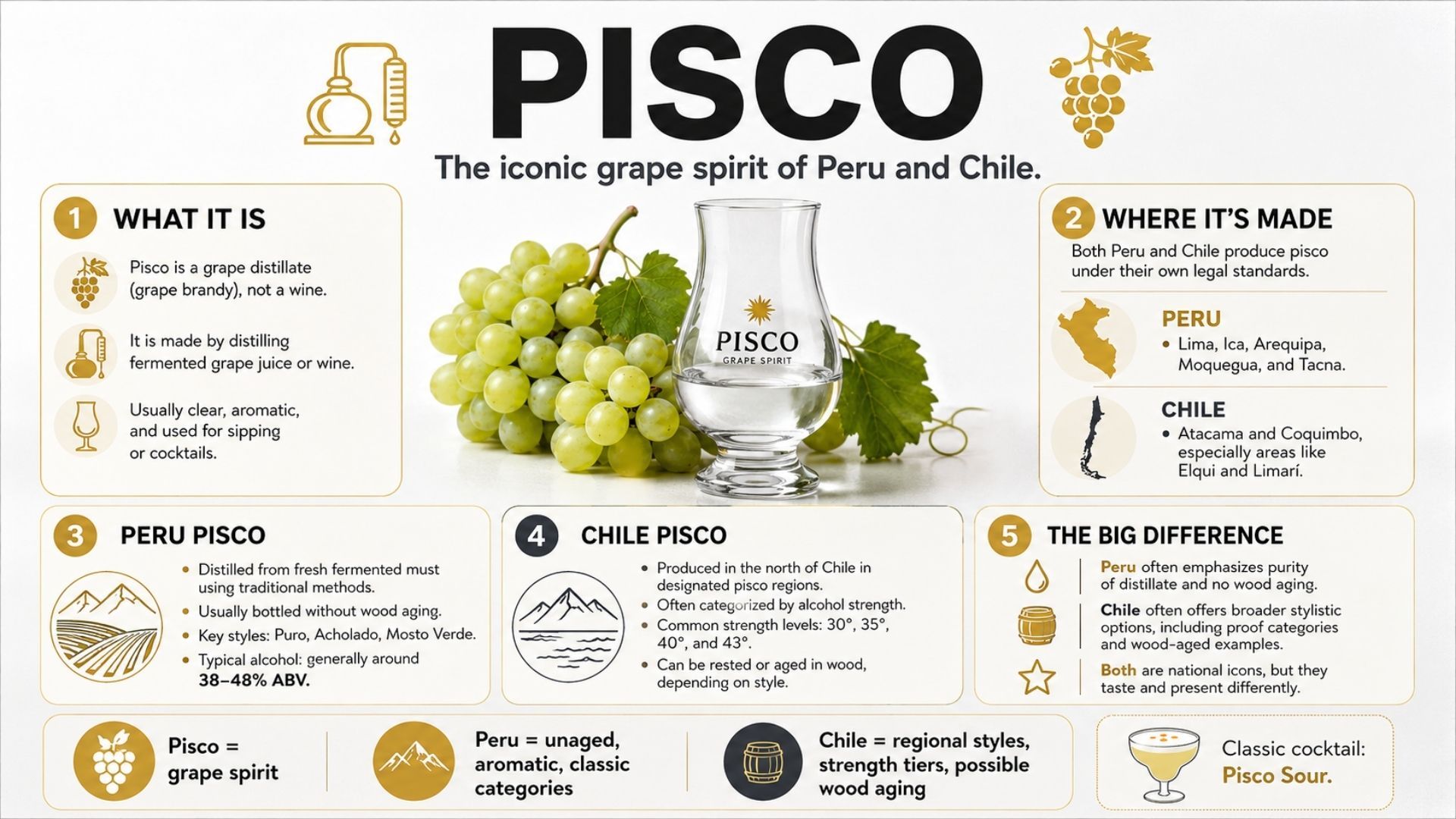
Pisco is a grape-based distilled spirit produced in designated regions of Peru and Chile. It begins with fermented grapes or wine and is distilled into a spirit whose character can reflect grape variety, climate and production technique.
Yet the feud, however heated, should not overshadow the drink itself. Pisco is one of the most distinctive spirits in the world, defined by a philosophy of purity that sets it apart from nearly every other brandy on earth. Understanding what it is, where it comes from, and how it is made reveals a spirit whose character is inseparable from the harsh and beautiful landscape that produces it.
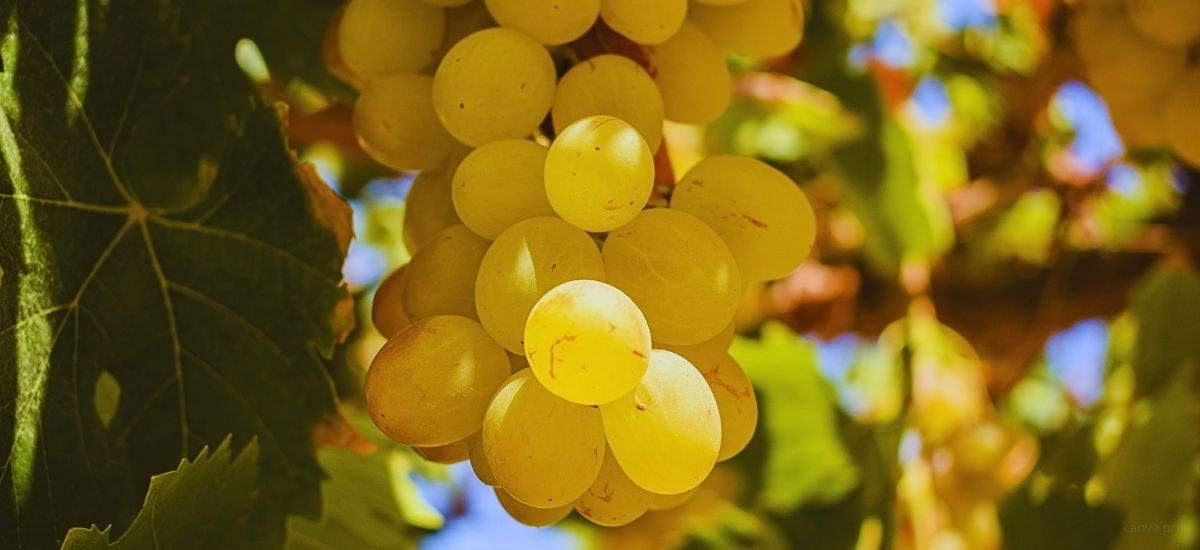
A War Fought in Bottles
The dispute begins with the Spanish, who brought grapevines to their South American colonies in the sixteenth century. In the coastal valleys of what is now southern Peru, settlers began distilling wine into a clear, potent brandy that they called aguardiente. A Peruvian port used to ship the spirit lent it a name, one derived from pisku, a word for bird in the Indigenous Quechua language, and the town, the port, and the drink all came to share it. From there the tradition spread down the coast into Chile, and the two lineages have quarreled over ownership ever since.
Much of the modern bitterness traces to the War of the Pacific, fought from 1879 to 1883, in which Chile defeated Peru and annexed territory, deepening a national rivalry that pisco came to symbolize. Chile secured a formal denomination of origin for its pisco in 1931 and even renamed a town Pisco Elqui in 1936 to reinforce its claim. Peru protected its own denomination decades later and has pressed its case aggressively. Recently the momentum has favored Peru, with UNESCO publishing colonial manuscripts in 2024 that trace the spirit's origins to Peruvian soil and the European Union siding with Peru's exclusive claim, a ruling Chile has refused to accept.
From Sun-Scorched Vine to Glass
What makes Peruvian pisco remarkable is a production philosophy of almost monastic strictness. It is made from eight permitted grape varieties, split between non-aromatic types like the emblematic Quebranta and aromatic ones like Italia and Torontel. Quebranta is itself a story, a black grape brought from Spain that adapted so completely to the stony soil and scorching sun of the southern coast that it became something new, taking its name from quebrar, meaning to break or tame.
The method that follows is unlike any other brandy tradition. Pisco is distilled only once, and crucially it is distilled from wine rather than from grape pomace, then bottled directly at its natural distillation strength. Cutting the spirit with water afterward, a routine step for most spirits, is simply unthinkable to Peruvian producers. Most striking of all, the spirit never touches wood. It rests only in neutral vessels of steel, glass, or clay, so nothing intrudes on the grape. The result preserves the fresh, volatile aromatics of the young wine in the finished spirit, and it splits into three styles: puro from a single grape, acholado blended from several, and the prized mosto verde, distilled from partially fermented must for a richer, silkier body.
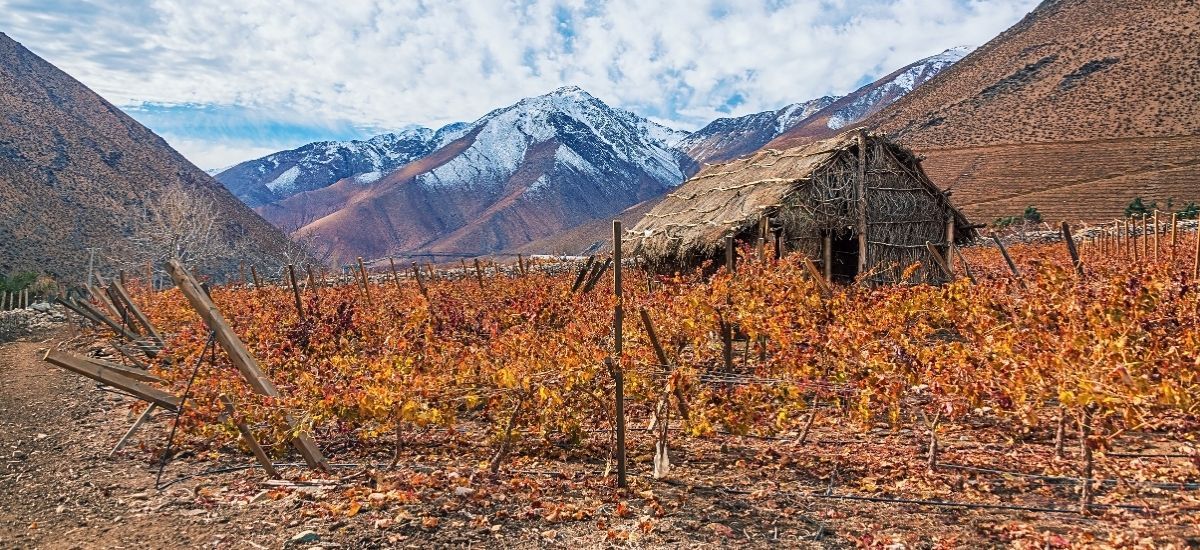
What Does Purity Taste Like?
Because it hides behind no barrel, pisco offers one of the most transparent tasting experiences in all of spirits, a direct and unmediated expression of grape, soil, and sun. A Quebranta-based pisco tends toward earthy, nutty, gently savory notes with a supple weight, while an aromatic Italia or Torontel bursts with floral perfume, ripe stone fruit, and citrus blossom. The five permitted growing regions of Peru, Ica, Lima, Arequipa, Moquegua, and Tacna, each impart their own subtle signature, much as distinct terroirs shape wine, with Ica standing as the historic heartland of production.
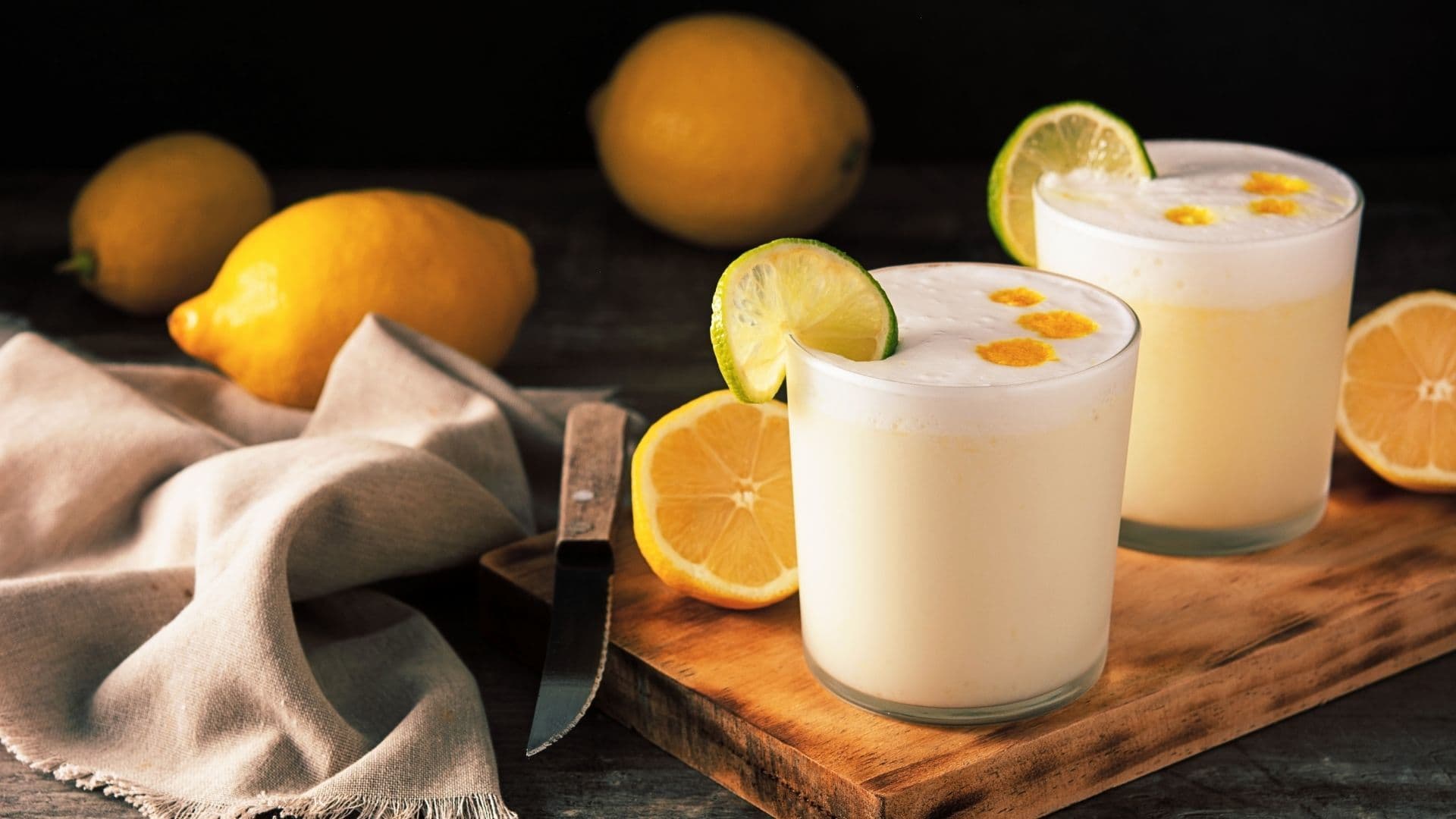
For all its complexity, pisco found its widest fame through cocktails. The Pisco Punch made it a sensation in Gold Rush San Francisco, and the Pisco Sour, blending the spirit with lime, sugar, egg white, and bitters, became a genuine icon and another point of national pride that Peru and Chile both claim to have invented. Its clean, vivid character makes it a natural in the modern bar, where its aromatic intensity lets it shine in ways that heavier, oak-aged spirits cannot. A well-made pisco needs nothing but a chilled glass to reveal itself, though it rewards the creative bartender just as generously.
Pisco is a South American grape spirit produced from fermented wine or grape must and closely tied to regional viticultural traditions. Peru and Chile both produce protected versions of pisco, but their regulations, permitted grapes and production styles are not identical.
The Takeaway
Pisco is proof that a spirit can be at once fiercely contested and quietly singular. The rivalry between Peru and Chile, real and unresolved, is in some sense a tribute to how much the drink means to the people who make it, a passion worth respecting even when the arguments grow heated. Behind the dispute stands a brandy of genuine distinction, and the Peruvian expression in particular follows a code of purity that few other spirits would dare attempt, forgoing the softening influence of oak and water to present the grape utterly unadorned.
That transparency is precisely what makes pisco worth knowing. In a world of spirits increasingly defined by barrel aging and elaborate finishing, pisco insists on the opposite, on freshness, immediacy, and an honest reflection of the vine and the sunbaked earth that nourished it. It carries the flavor of a specific and demanding landscape directly into the glass, unmediated and unashamed. Whether sipped neat to appreciate its aromatic clarity or shaken into the frothy embrace of a Pisco Sour, it offers a taste of the Pacific coast and of a heritage that two nations have loved fiercely enough to fight over for generations. The feud endures, but so does the simple pleasure in the glass.
Frequently Asked Questions
What is pisco?
Pisco is a distilled grape spirit produced from fermented grapes or wine. Unlike neutral spirits, it is generally intended to preserve recognizable grape-derived aroma and flavor.
Is pisco a type of brandy?
Yes. In broad spirits terminology, pisco belongs to the brandy family because it is distilled from fermented grape material. Its protected regional traditions and production rules distinguish it from generic grape brandy.
Where is pisco made?
Protected pisco production exists in both Peru and Chile. Peru recognizes specific production zones including Lima, Ica, Arequipa, Moquegua and parts of Tacna, while Chile restricts production to designated northern regions.
What grapes are used to make pisco?
A range of grape varieties may be used depending on the country and style. Peruvian production includes both aromatic and less aromatic grapes, while Chile has its own permitted varieties and regional traditions.
Is all pisco clear?
No. Peruvian pisco is typically clear and unaged in wood, while Chilean regulations allow styles that may undergo maturation and develop additional color and flavor.
What does pisco taste like?
Pisco can show fresh grape, citrus, floral, stone-fruit, herbal and spice characteristics. The exact profile depends heavily on grape variety, distillation technique and whether the spirit has been matured.