The Exotics of Asia: From Shōchū to Snake Liquor
Sake is a worthy ambassador, but it represents a sliver of what the continent actually ferments and distills. Follow the trail far enough and it ends at a pit viper coiled in the bottom of a bottle.
For most drinkers outside Asia, the continent's drinking culture begins and ends with sake. It is a fine emissary, precise and endlessly food friendly, and it has done more than any other bottle to earn Asian brewing a seat at the serious table. Yet sake is a single entry in a catalog so vast that no one word covers it. Across thousands of years, communities from Okinawa to the Himalayas built drinks calibrated to local grain, climate, and ceremony, using a fermentation technology that developed entirely independently of anything in Europe.
Asia is home to one of the world's oldest and most diverse traditions of distilled beverages, yet many of its iconic spirits remain unfamiliar outside their countries of origin. While Japanese whisky and premium sake have earned global recognition, beverages such as shōchū, awamori, baijiu, soju, and regional herbal infusions represent equally important parts of Asia's drinking culture.
Follow that catalog far enough and it turns genuinely strange. It runs from clay-aged spirits of real refinement, through cloudy farmhouse brews still made at village shrines, and arrives eventually at a bottle with a venomous snake inside it. These are not novelties bolted onto a serious tradition. They sit on one continuous spectrum, and understanding how they connect proves far more rewarding than gawking at the far end.
The Spirits That Sake Overshadows
The foundational difference is mold. European brewing converts grain starch into fermentable sugar by malting, coaxing the grain to sprout. Asian brewing hands that job to filamentous molds instead: kōji in Japan, nuruk in Korea, qū in China. Nearly everything that follows descends from that single divergence, and it is the most useful thing a curious drinker can know.
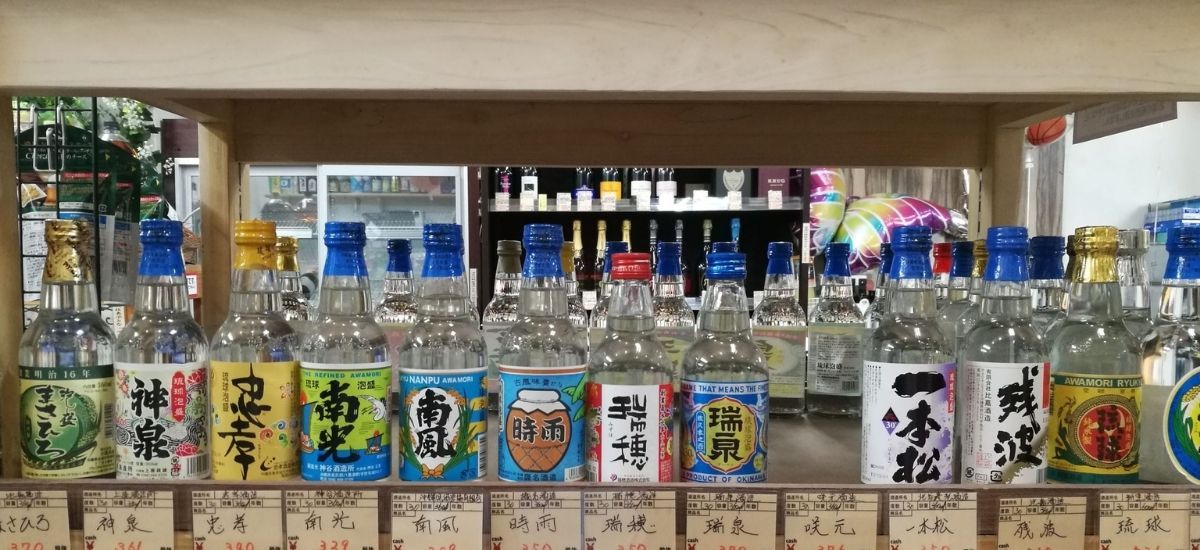
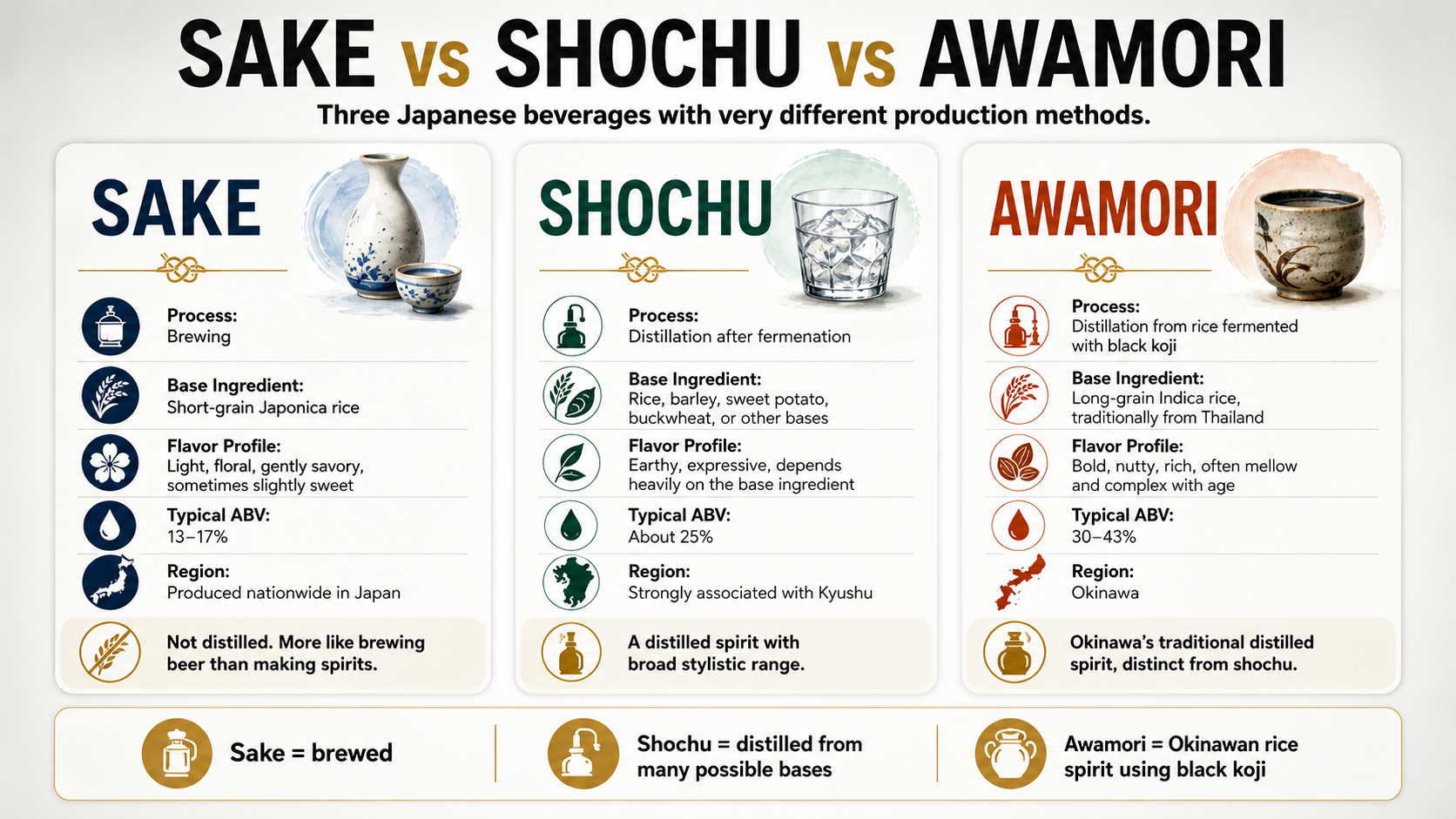
From it comes shōchū, Japan's native distilled spirit and a category with more than five centuries behind it. Its finest tier, honkaku, is distilled only once to preserve the character of the base ingredient, and that ingredient shifts with the map. Sweet potato and barley dominate in Kyūshū, rice in Kumamoto, sugarcane in the subtropical Amami Islands. Unusually among world spirits, shōchū rests in earthenware, glass, or steel rather than wood, so it evolves quietly without taking on any oak. Okinawa contributes awamori, made from long-grain Thai rice and a distinctive black kōji, then aged in clay urns as kūsu. Most of it is poured at twenty-five to thirty-five percent alcohol, cut with ice or hot water depending on the season. Korea contributes soju, traditionally built on nuruk though most supermarket bottles now rely on diluted neutral alcohol. China contributes baijiu, a sorghum spirit that frequently exceeds fifty percent, splits into distinct regional aroma families, and quietly ranks as the most consumed spirit on earth.
What Does a Village Drink?
Below the commercial tier sits a whole stratum of rustic brews that were never leisure products at all. They were agricultural technology, made from surplus grain to feed laborers and mark harvests. Korea's makgeolli is the emblem: cloudy, tangy, lightly effervescent, and modest at six to eight percent, built from little more than rice, water, and nuruk. Its older name, nongju, translates roughly as farmer's brew.
Its history carries a genuine bruise. Colonial-era taxation discouraged home brewing, and in 1964 a rice shortage pushed producers onto wheat flour and imported corn, gutting quality for a generation. Only in recent decades has rice makgeolli fully recovered, and Korea now counts more than a thousand varieties with regional breweries scattered across the country. Japan's parallel is doburoku, the thick unfiltered ancestor of sake, historically brewed at farms and shrines and legally not sake at all, since Japanese law requires pressing. Cloudy nigori is its more polished cousin, pressed through coarse mesh rather than left whole. Farther west, chhaang carries the same idea into the Himalayas, a warm barley or millet ferment sustaining households across Nepal, Bhutan, and Tibet, where repeated infusions over the same grain stretch a small harvest a long way.
The Serpent in the Bottle
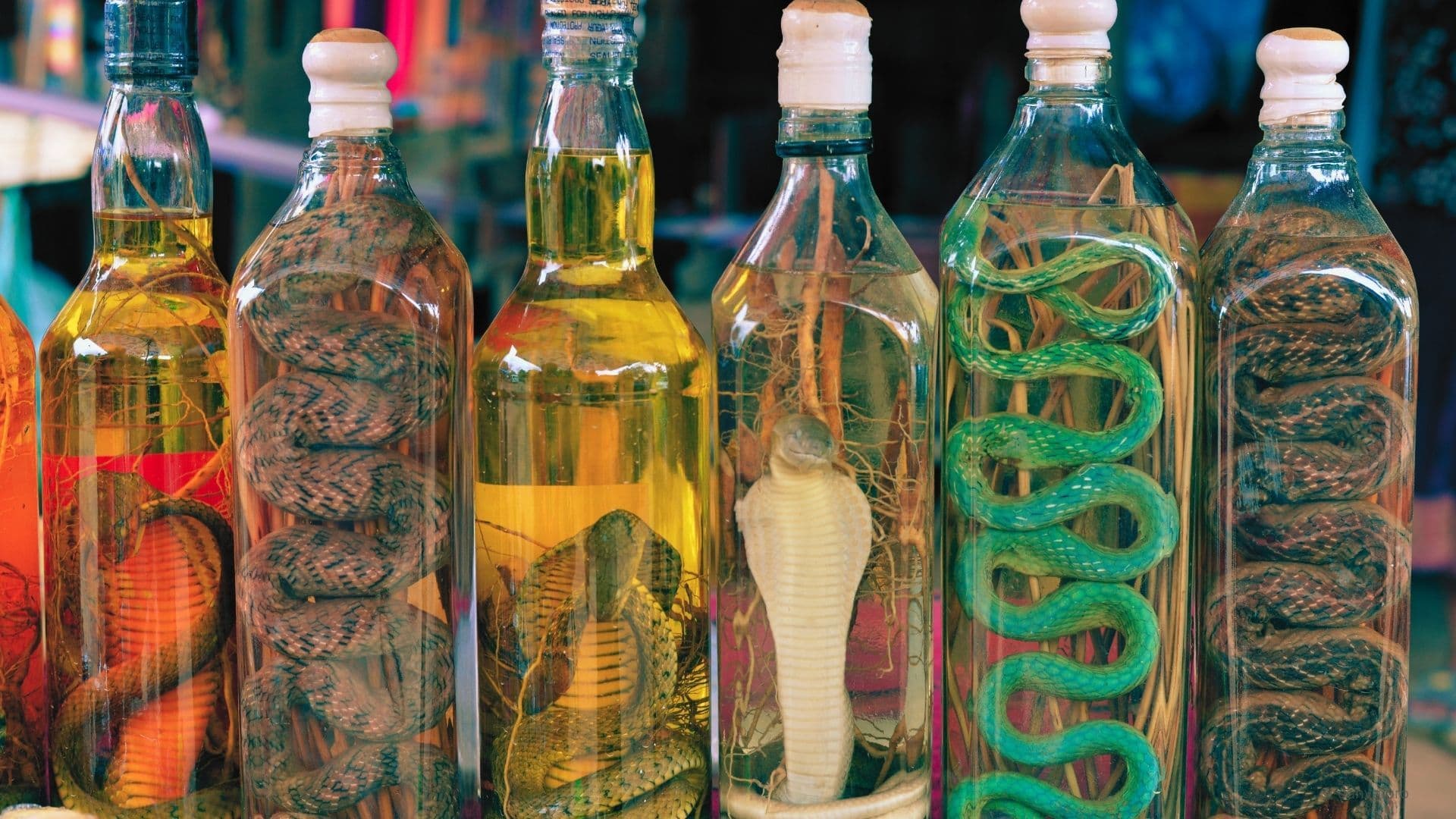
Which brings us to habushu, the drink that launches a thousand photographs. It is awamori infused with a habu, the pit viper native to the Ryūkyū Islands, often alongside herbs and honey, and it dates to roughly the fourteenth century when it was a delicacy of the Okinawan elite. The venom poses no danger, being a protein that alcohol denatures. Similar preparations run throughout Vietnam, Thailand, Laos, and southern China, joined by infusions built around scorpions, geckos, seahorses, and deer antler.
The logic behind them is not random shock value. It descends from traditional pharmacology and the belief that a creature's qualities transfer to whoever drinks them, which is why habushu was long credited with restoring vigor and easing arthritis. Modern science offers no support for those claims, and the category now carries real complications. The trade raises legitimate animal welfare and conservation questions, some species involved are protected, and import restrictions make these bottles difficult to obtain legally across much of the West. Most tellingly, much of what sells today is aimed at visitors rather than locals, which quietly converts a medicinal tradition into a souvenir. The bottle is best understood as an artifact of belief rather than a dare.
The Takeaway
The word exotic describes the distance of the person looking, not the thing being looked at. To an Okinawan, awamori is unremarkable weeknight drinking, and a Korean farmer regards makgeolli roughly the way a Bavarian regards a helles. What actually unites this sprawling catalog is not strangeness but two shared traits: a fermentation engine built on mold rather than malt, and an almost fanatical devotion to locality. Each of these drinks answers a narrow question about what grows nearby and what the climate will permit.
That makes this a genuinely good moment to be curious. Honkaku shōchū now exports widely, makgeolli is enjoying a revival that reaches well past Korea, and loosened licensing has brought doburoku back from near extinction. The map available to an adventurous drinker is expanding quickly, and it rewards attention with traditions every bit as deep and place obsessed as those of Bordeaux or Speyside, built on an entirely different biological foundation. The snake in the bottle makes for a memorable story, but it is the least interesting thing here. The real discovery is that an entire parallel civilization of fermentation has been running alongside the Western canon all along, largely unexamined, and it is finally within reach of anyone willing to look.
Frequently Asked Questions
What are the most important traditional spirits in Asia?
Some of Asia's best-known traditional spirits include Japanese shōchū and awamori, Korean soju, Chinese baijiu, Thai rice whisky, Vietnamese rice liquor, Philippine lambanog, and numerous regional herbal and infused spirits.
What is the difference between shōchū and sake?
Although both originate in Japan, sake is a brewed rice beverage similar in production to beer, while shōchū is a distilled spirit. Shōchū generally has a higher alcohol content and can be made from many ingredients besides rice.
Why is soju so popular?
Soju is approachable, relatively low in alcohol compared with many distilled spirits, affordable, and deeply integrated into Korean dining culture. Its versatility has helped make it one of the world's highest-selling spirit categories.
What is baijiu, and why does it taste so different?
Baijiu is China's traditional distilled spirit, typically made from sorghum and fermented using unique microbial cultures called qu. Depending on the regional style, it can display aromas ranging from tropical fruit and floral notes to savory, earthy, fermented, or umami characteristics unlike those found in Western spirits.
What makes awamori unique?
Awamori is produced exclusively in Okinawa using long-grain indica rice and black kōji mold (Aspergillus luchuensis), distinguishing it from both sake and shōchū. Many premium examples are aged for years or even decades.
What is the typical alcohol content of Asian distilled spirits?
Alcohol levels vary considerably. Soju commonly ranges from 16% to 25% ABV, shōchū from 20% to 30% ABV, awamori generally from 30% to 43% ABV, and baijiu frequently ranges between 40% and 60% ABV.
Is snake liquor actually consumed?
Yes. Snake liquor is consumed in parts of China, Vietnam, and Southeast Asia, though it is relatively uncommon and often associated with traditional medicinal beliefs rather than everyday drinking. Production and sale are regulated or restricted in some countries due to wildlife conservation laws.
Why are Asian spirits becoming more popular globally?
Growing interest in authentic regional cuisines, craft cocktails, premium spirits, and cultural exploration has introduced consumers to beverages beyond whisky and sake. Bartenders and sommeliers increasingly feature shōchū, awamori, and baijiu in modern beverage programs.