The Rise of Japanese Whisky
A spirit that began as a careful imitation of Scotch has become one of the most coveted categories in the world. The story of how it happened is a lesson in patience, precision, and the rewards of doing things slowly.
A little over a century ago, a young Japanese chemist named Masataka Taketsuru boarded a ship for Scotland with a single mission: to learn how whisky was made and bring the secret home. He apprenticed at working distilleries, married a Scotswoman named Rita, and returned with notebooks full of the craft. The whisky that resulted was, by design, an act of faithful imitation, an attempt to reproduce the smoke and depth of the Highlands on the other side of the world.
What is remarkable is what happened next. Over the following century, the student did not merely match the teacher. Japanese whisky developed a character entirely its own, eventually winning the highest honors at international competitions and commanding prices that would have stunned its founders. The category that began as a copy became a benchmark, and understanding how requires looking at where it started, what makes it different, and why the world suddenly cannot get enough.
A Scottish Blueprint, a Japanese Hand
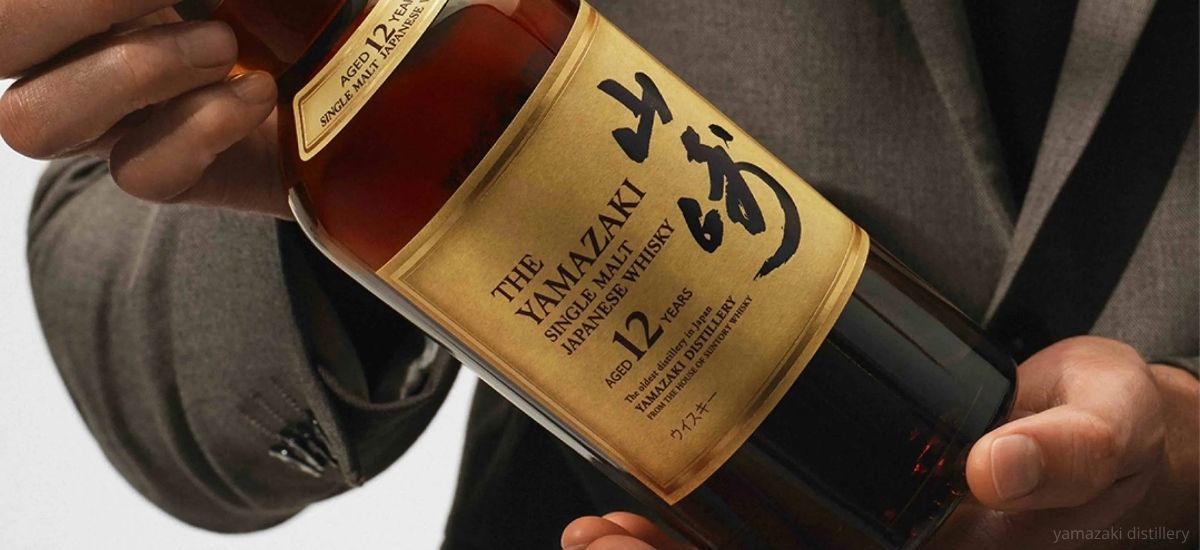
The two names that matter most are Taketsuru and Shinjirō Torii. Torii, an Osaka entrepreneur, financed the country's first true whisky distillery at Yamazaki near Kyoto in 1923, choosing the site for its celebrated water. Taketsuru, fresh from his Scottish education, built and ran it. The two would eventually part ways, with Taketsuru heading north to the cold, damp island of Hokkaidō, where the climate reminded him of Scotland, to found what became Nikka. From these two lineages, Suntory and Nikka, nearly the entire category descends.
The production method was lifted directly from Scotland: malted barley, pot still distillation, and long maturation in oak casks. Yet the Japanese approach diverged in subtle but consequential ways. Without the Scottish tradition of distilleries trading casks with one another, Japanese producers became vertically integrated, forced to create every component of a blend in-house. This pushed them toward extraordinary versatility, with single distilleries running stills of many shapes to generate a wide range of styles under one roof. The softer Japanese water, the distinct climate, and the occasional use of rare native Mizunara oak, which lends notes of sandalwood and incense, all combined to produce something that honored its origins without being bound by them.
For many enthusiasts, it represents the intersection of technical mastery and cultural refinement.
What Does Precision Taste Like?
If there is a single word that defines Japanese whisky, it is precision. The category is built on a near-obsessive attention to detail that touches every stage of production, from the selection of grain to the exact management of fermentation, distillation, and the slow conversation between spirit and wood. Where Scotch often celebrates a rugged sense of place, Japanese whisky tends to prize balance, harmony, and a kind of polished restraint. The aim is not to overwhelm but to compose.
That philosophy carries a reputational weight the industry has worked hard to protect. For decades, a curious loophole allowed bottlers to import whisky from Scotland or Canada, blend it in Japan, and sell it under Japanese-evoking labels at inflated prices, with the buyer none the wiser. The reckoning came in 2021, when the Japan Spirits and Liqueurs Makers Association introduced formal standards, fully in force by 2024, requiring that anything called Japanese whisky be fermented, distilled, aged, and bottled in Japan using domestically sourced water. The rules are voluntary rather than legal, binding only the association's members, yet the major houses embraced them. The effect was to draw a clear line between the authentic article and the imitation, reinforcing that the precision in the glass is matched by integrity on the label.
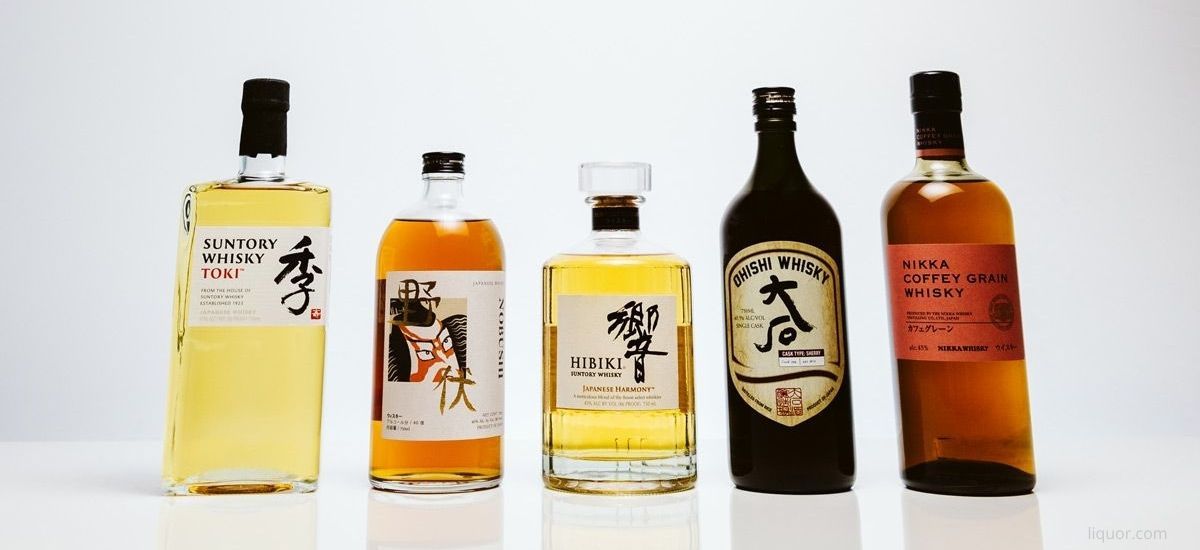
The Price of Scarcity
The commercial story is almost difficult to believe. Through the late twentieth century, Japanese whisky was largely a domestic affair, consumed at home in the highball glasses of office workers and barely known abroad. Then, beginning around 2003, the bottles started winning major international awards, and not occasionally but relentlessly, year after year, often beating the Scottish malts they had once studied. The world took notice, and demand detonated.
The numbers tell the rest. Exports surged by well over a thousand percent across a single decade, and the secondary market followed. One closely watched index of collectible Japanese whisky rose roughly 580 percent in the years after 2014, while individual aged expressions appreciated by many multiples of their original price. In 2021, a single bottle of Yamazaki 55 Year Old sold at auction in Hong Kong for around 795 thousand dollars. The root cause is simple arithmetic: producers slashed output during the lean years of the 1990s, so the aged stock that fuels the most prized bottles is genuinely scarce and cannot be conjured on demand. More recently the frenzy has cooled somewhat, with the broader market entering a calmer, more measured phase, yet prices for the finest authentic bottles have held with remarkable resilience.
The origins of Japanese whisky can be traced to the early 1900s when Japanese producers looked to Scotland as a model for quality whisky production. Rather than simply copying Scotch, however, Japanese distillers focused on refinement, precision, and blending artistry.
The Takeaway
Japanese whisky offers one of the most instructive arcs in the modern drinks world, a journey from humble imitation to global benchmark accomplished not through shortcuts but through sustained, almost stubborn attention to quality. The founders set out to make Scotch, and in chasing that goal so faithfully they eventually made something new, a spirit defined by balance and meticulous craft rather than by mimicry. The category's century-long apprenticeship produced a mastery that now stands fully on its own.
For anyone watching the soaring prices with a skeptical eye, the honest answer is that they reflect both real quality and real scarcity, with a measure of speculative heat layered on top. The recent cooling of the market is a useful corrective, separating genuine appreciation from pure investment fever and reminding everyone that whisky, in the end, is made to be poured. What endures beneath the auction headlines is the substance itself. A well-made Japanese whisky remains among the most refined expressions of the distiller's art anywhere, and the patience that defines its production is the same patience it rewards in those who take the time to understand it.
Frequently Asked Questions
What is Japanese whisky?
Japanese whisky is a distilled spirit produced in Japan using methods largely inspired by Scotch whisky production, including malted barley, pot distillation, barrel aging, and blending.
When did Japanese whisky production begin?
Commercial Japanese whisky production began in the 1920s, with pioneers such as Masataka Taketsuru and Shinjiro Torii helping establish the industry's foundations.
What grains are used in Japanese whisky production?
Most Japanese whisky is made from malted barley, though grain whiskies may also include corn and other cereal grains depending on the style.
How long must Japanese whisky be aged?
Under modern Japanese whisky labeling standards, the spirit must be aged in wooden casks in Japan for a minimum of three years before being sold as Japanese whisky.
What is the typical alcohol content of Japanese whisky?
Most bottlings are released between 40% and 46% ABV, although cask-strength expressions can exceed 50% ABV.
How does Japanese whisky differ from Scotch whisky?
While production methods are similar, Japanese whisky often emphasizes balance, elegance, subtlety, and blending precision rather than overt power or regional identity.
Why has Japanese whisky become so expensive?
Global demand has grown rapidly while many aged stocks remain limited, creating shortages that have driven prices significantly higher over the past decade.