Alcohol and Health: The Big Rethink
The old story that a daily glass was good for you has quietly collapsed, and the guidance has followed. What that means for anyone who loves a well-made drink is more interesting than the headlines suggest.
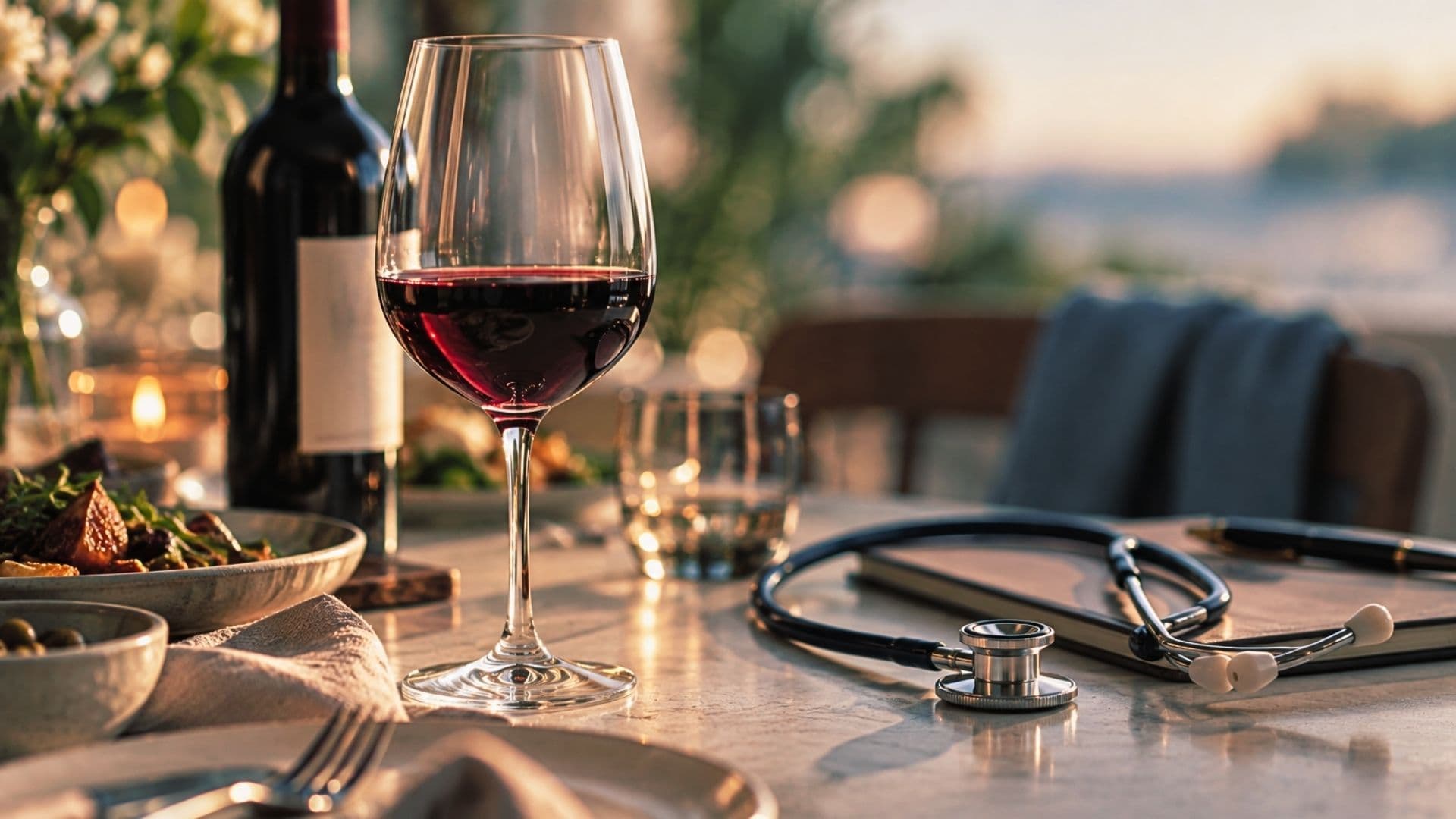
For a generation, the reassuring line was that a little alcohol did a body good. A glass of red with dinner was practically a health measure, blessed by studies showing that moderate drinkers outlived teetotalers, and the wine industry was happy to let the idea travel. That comfortable story has come apart. The research it rested on turned out to carry a subtle flaw, and in its place a blunter message has taken hold, one that reaches from global health bodies down to the label on the bottle.
Moderation can sometimes sound outdated in a conversation increasingly framed around zero consumption.
The scale of the shift is easy to underestimate. In 2001, more Americans thought moderate drinking was good for you than thought it was harmful. By 2025 a majority called it bad for health, and the share of adults who drink at all had fallen to the lowest point in nearly ninety years of measurement. Something real is happening, and it deserves a clear-eyed look rather than either a shrug or a panic. The honest version of the story is less tidy than the warnings, and it points toward a conclusion worth sitting with.
What Actually Changed
The turn traces to a reckoning with the evidence itself. The famous benefit of moderate drinking, the so-called J-curve showing light drinkers as the healthiest group, was undermined by a problem researchers call the sick-quitter effect. Many people counted as nondrinkers had actually stopped because they were already ill, which made the moderate drinkers look healthier by comparison than they truly were. When studies corrected for that distortion, much of alcohol's protective glow faded, and the cardiovascular upside that once justified the nightly glass grew far harder to find.
What did not fade was the link to cancer. The International Agency for Research on Cancer had already placed alcohol in its highest-risk group, alongside tobacco and asbestos, and the connection holds across at least seven cancers including breast and colorectal. In early 2023 the World Health Organization drew the strong conclusion, stating plainly that no level of alcohol consumption is safe for health. Two years later the United States Surgeon General followed with an advisory tying alcohol to roughly 100,000 cancer cases a year in the country and calling for cancer warnings on every bottle. The ground had genuinely moved beneath the industry's feet.
Is the Alarm Warranted?
Here the story earns some nuance, because the strongest version of the warning has its critics, and they are not merely industry shills. The phrase no safe level is technically true and also slightly misleading, since the same could be said of driving or sunlight. What matters for a person is absolute risk, and at very low levels of drinking that added risk is real but small. Several researchers have argued that the evidence linking light consumption, meaning something like a drink or less per day, to major harm rests on weaker associations than the confident headlines imply.
None of that erases the core finding, and it would be dishonest to pretend otherwise. Heavy and even moderate drinking clearly raise cancer risk, and half of Europe's alcohol-attributable cancers trace to light and moderate consumption rather than to obvious abuse. The reasonable reading is that alcohol sits on a dose-response curve with no magic threshold, where more drinking means more risk and less means less. That framing does not demand universal abstinence, and it does not license heavy drinking either. It hands the decision back to the individual, armed with clearer information than any previous generation of drinkers ever had.
The big rethink around alcohol is not really about declaring the end of drinking. It is about replacing an overly comfortable health narrative with a more accurate one.
Something Worth Drinking
Set the epidemiology aside for a moment and a simpler truth comes into view, one that any good bartender or winemaker already understands. If a drink carries a genuine cost, however modest, then the drink had better be worth it. That single idea reorganizes the whole question. It turns drinking from a background habit into a deliberate choice, and it quietly favors quality over quantity in a way the health data and the pleasure of the table happen to agree on.
The drinker who internalizes this stops pouring the third glass out of momentum and starts treating a good bottle as an occasion. A thoughtfully made wine tied to a place and a season, a spirit that took years to come into its own, a cocktail built with care, these reward attention in a way that a mindless buzz never does. The rest of the equation follows naturally, in eating well, moving the body, and keeping the routine clean enough that the drink becomes a highlight instead of a daily tax on your health. Consumption falls, appreciation rises, and the experience improves rather than diminishes. Moderation, in this light, is less a sacrifice than a way of getting more from less.
Drinking less, drinking less often and avoiding heavy consumption remain meaningful choices for people who enjoy alcohol. The emerging culture may therefore be less about abstinence versus indulgence and more about intentionality: drink because you want the experience, understand what comes with it, and recognize that moderation still matters.
The Takeaway
The rethink around alcohol is not a fad that will pass once the news cycle moves on. The collapse of the health halo is permanent, grounded in evidence that will not be un-learned, and the culture has already priced it in, visible in falling consumption and in a younger generation that treats sobriety as an ordinary option rather than a deprivation. Anyone in the business of making or selling drinks should absorb that reality rather than wish it away, because the customer has already absorbed it.
Yet the conclusion this points toward is not the end of drinking, and the most likely future is neither prohibition nor a return to the old carelessness. It is a smaller, better-considered relationship with alcohol, in which people drink less often and choose more carefully when they do. That outcome should not frighten anyone who genuinely loves wine and spirits, because it rewards exactly what they claim to value. A world that drinks with intention is a world that finally takes the contents of the glass seriously, treating them as something to be understood and savored on the right occasion rather than consumed by reflex. The buzz was never the point. The meaning always was, and that is the part worth keeping.
Frequently Asked Questions
Is any amount of alcohol completely safe?
Current public-health guidance does not identify a completely risk-free level of alcohol consumption, particularly in relation to cancer. Risk generally increases as consumption increases, meaning lower intake carries less alcohol-related risk than higher intake.
Is moderate drinking still considered healthy?
Moderate drinking is better understood as lower-risk drinking rather than healthy drinking. The CDC notes that even moderate consumption may carry more risk than not drinking, and people who currently do not drink are not advised to begin for health benefits.
Does red wine still have heart-health benefits?
The evidence supporting alcohol itself as a cardiovascular benefit has become increasingly questioned. Red wine contains potentially beneficial plant compounds, but those compounds can also be obtained through foods without alcohol exposure.
Why is alcohol linked to cancer?
The body converts ethanol into acetaldehyde, a carcinogenic compound that can damage DNA. Alcohol can also influence oxidative stress, hormones and other biological pathways associated with cancer development.
Does drinking less actually make a difference?
Yes. Alcohol-related risk generally follows a dose-response relationship, and reducing consumption lowers exposure. Research evaluated by IARC also supports reductions in risk for certain cancers after alcohol consumption is reduced or stopped.
Why are people drinking less alcohol?
Health awareness is one factor, alongside interest in better sleep, fitness, mental clarity, cost savings and improved nonalcoholic alternatives. In 2026, Gallup reported that U.S. alcohol participation remained at a record-low 54 percent.